Technical Guide
Digital vs Offset Printing for Large Format: Making the Right Choice
Mike Chen
August 19, 2025
12 min read
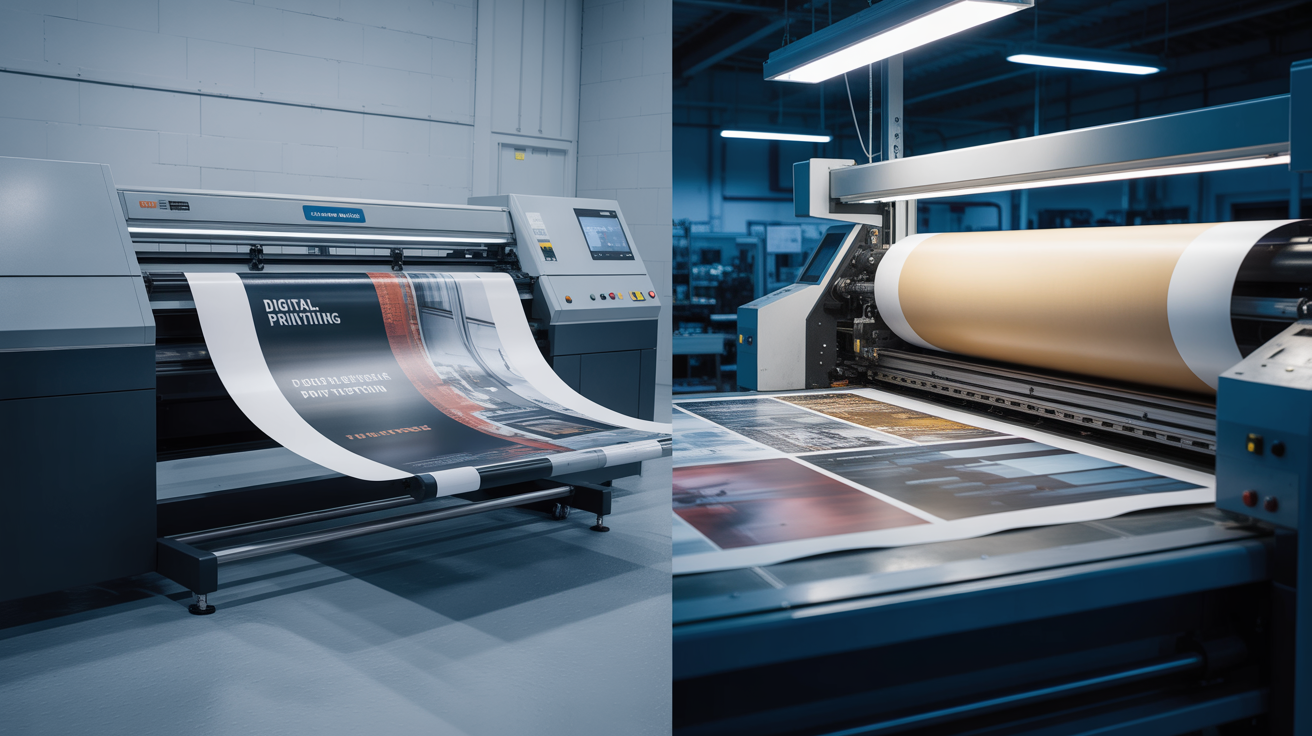
Choosing between digital and offset printing for large format projects can significantly impact your project's success, budget, and timeline. Understanding the strengths and limitations of each method ensures you make the right choice for your specific needs.
**Understanding Digital Large Format Printing**
Digital printing has revolutionized the large format industry by offering unprecedented flexibility and speed. Modern digital printers use advanced inkjet technology to produce high-quality graphics directly from digital files without the need for plates or screens.
**Key advantages of digital printing include:**
- **Quick turnaround times**: Jobs can often be completed within 24-48 hours
- **No setup costs**: No plates or screens required, making small runs economically viable
- **Variable data printing**: Each print can be unique, perfect for personalized campaigns
- **Immediate proofing**: What you see on screen closely matches the final output
- **Cost-effective for short runs**: Ideal for quantities under 500 pieces
**Digital printing excels for:**
- Rush jobs requiring immediate delivery
- Short-run promotional materials
- Personalized or variable data projects
- Prototypes and test materials
- Projects with frequent design changes
**Understanding Offset Large Format Printing**
Offset printing, also known as lithographic printing, transfers ink from plates to rubber blankets before applying it to the substrate. While requiring more setup time, offset printing offers superior quality and cost efficiency for larger quantities.
**Key advantages of offset printing include:**
- **Exceptional quality**: Superior color reproduction and consistency
- **Cost efficiency at scale**: Unit costs decrease significantly with quantity
- **Wide material compatibility**: Works with virtually any substrate
- **Special ink options**: Metallic, fluorescent, and spot colors available
- **Pantone color matching**: Precise color matching for brand consistency
**Offset printing excels for:**
- Large quantities (typically 500+ pieces)
- Brand-critical applications requiring exact color matching
- Premium materials and finishes
- Projects where cost per unit is crucial
- Long-term marketing campaigns
**Quality Comparison: Digital vs Offset**
**Color Reproduction**: Offset printing traditionally offered superior color quality, but modern digital printers have narrowed this gap significantly. For most applications, digital quality is indistinguishable from offset to the untrained eye.
**Consistency**: Offset printing provides better consistency across large runs, while digital printing may show slight variations over extended runs due to printhead wear and environmental factors.
**Detail and Resolution**: Both methods can achieve excellent detail, with digital often providing sharper text and fine lines due to its direct printing process.
**Cost Analysis Framework**
**Setup Costs**:
- Digital: Minimal setup costs, mainly file preparation
- Offset: Significant setup including plates, inks, and press preparation
**Per-Unit Costs**:
- Digital: Fixed cost per unit regardless of quantity
- Offset: High initial cost that decreases dramatically with quantity
**Break-even Analysis**: The crossover point where offset becomes more economical typically occurs between 200-500 pieces, depending on the specific project requirements and complexity.
**Turnaround Time Considerations**
**Digital Printing Timeline**:
- File preparation: 2-4 hours
- Printing: 1-6 hours depending on quantity
- Finishing: 2-4 hours
- Total: Often same-day or next-day delivery
**Offset Printing Timeline**:
- Pre-press and plates: 1-2 days
- Press setup: 2-4 hours
- Printing: 4-12 hours
- Drying/curing: 24-48 hours
- Finishing: 4-8 hours
- Total: Typically 5-7 business days
**Material Compatibility**
**Digital Printing**: Works excellently with most synthetic materials, vinyl, fabric, and coated papers. Some limitations with very glossy or textured surfaces.
**Offset Printing**: Compatible with virtually any material including papers, plastics, metals, and specialty substrates. Better performance on challenging surfaces.
**Environmental Considerations**
**Digital Printing**: Generally more environmentally friendly with water-based or eco-solvent inks, minimal waste, and no need for plates or chemicals.
**Offset Printing**: Traditional offset uses more chemicals and generates more waste during setup, but newer processes have improved environmental performance significantly.
**Making Your Decision**
**Choose Digital When**:
- Quantity is under 500 pieces
- Quick turnaround is essential
- Budget for setup costs is limited
- Design personalization is required
- Testing different designs is needed
**Choose Offset When**:
- Quantity exceeds 500 pieces
- Precise color matching is critical
- Maximum cost efficiency is required
- Premium quality is non-negotiable
- Long-term consistency matters
**Hybrid Approaches**
Consider combining both methods for complex campaigns. Use digital for short-run tests and personalized elements, then transition to offset for large-scale rollouts once designs are proven effective.
**Working with Your Printer**
Discuss your specific needs with printing professionals who can evaluate your project's unique requirements. Many modern print shops offer both services and can recommend the optimal approach based on your timeline, budget, and quality expectations.
**Future Trends**
The gap between digital and offset quality continues to narrow as digital technology advances. However, offset maintains advantages in specific applications, particularly for large runs and specialty finishes. Understanding both methods ensures you're prepared for any project requirement.
Tags:
digital printing
offset printing
large format
printing comparison
print quality
cost analysis
Related Articles

Technical Guide
Colour Management for Large Format Printing: A UK Business Guide
Getting colours right in large format printing is critical for brand consistency. This guide walks UK businesses through colour modes, ICC profiles, soft proofing, and the most common mistakes to avoid before sending artwork to print.
Technical Guide
Colour Management for Large Format Printing: A UK Business Guide
Discover how UK businesses can achieve perfect colour accuracy in large format printing. Learn about CMYK vs RGB, Pantone matching, file preparation, and maintaining brand consistency across all your signage and display materials.