How to Prepare Artwork for Large Format Printing: A UK Business Guide
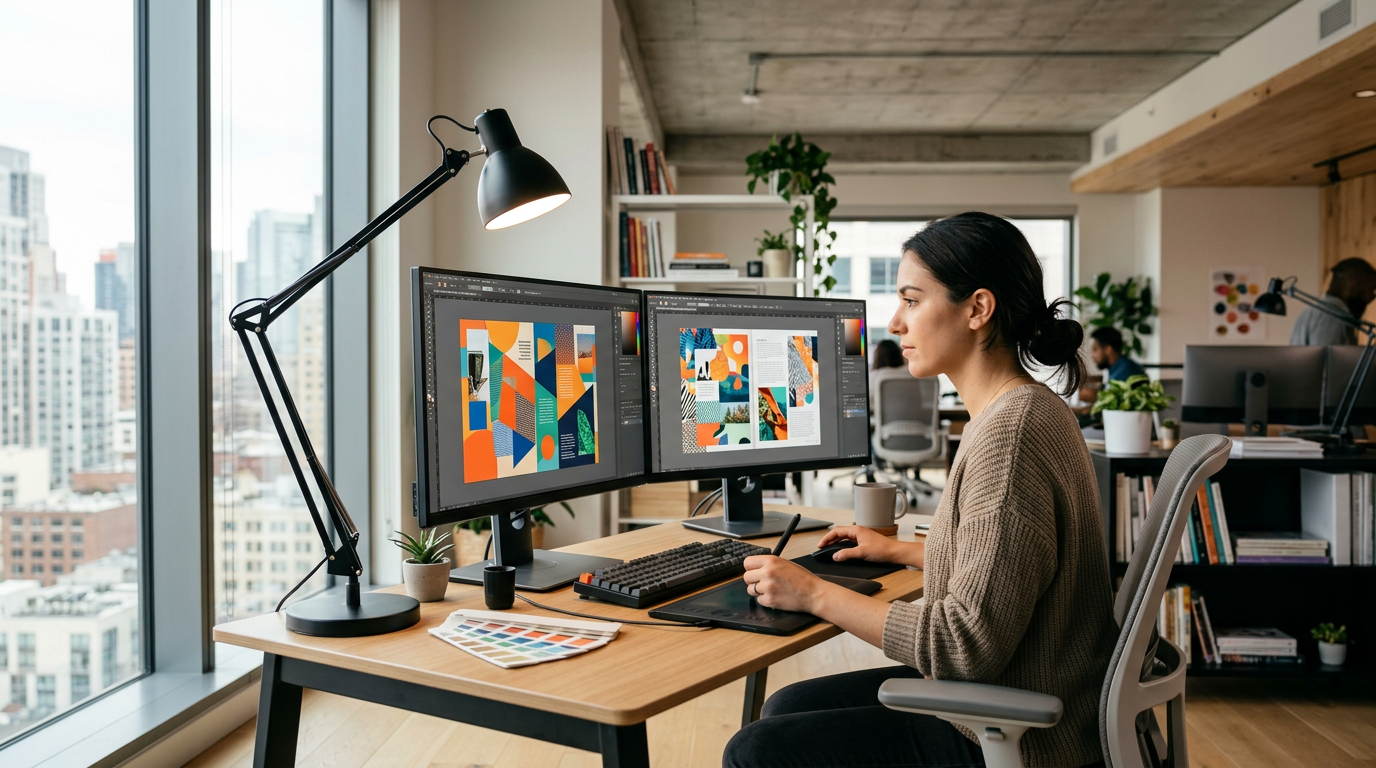
Getting your artwork right the first time can save your business valuable time and money when ordering large format prints. Whether you're creating banners for a London storefront, exhibition graphics for a Birmingham trade show, or vehicle wraps for a Manchester fleet, proper file preparation is essential for achieving professional results.
At PRiNT BiG UK, we've seen countless projects delayed or requiring costly reprints due to simple artwork errors. This comprehensive guide will walk you through the essential steps to prepare print-ready files that deliver stunning results every time.
Understanding Resolution Requirements for Large Format Printing
Unlike desktop printing, large format prints are typically viewed from a distance, which affects the resolution requirements. The viewing distance principle is crucial to understand:
- Close viewing (1-2 metres): Posters, retail displays, and indoor signage require 150-300 DPI
- Medium viewing (2-5 metres): Banners, exhibition stands, and wall graphics need 100-150 DPI
- Distance viewing (5+ metres): Building wraps, billboards, and vehicle graphics can work at 50-100 DPI
A common mistake UK businesses make is assuming all prints need 300 DPI. A 3-metre banner at 300 DPI would create an unnecessarily large file that's difficult to work with and offers no visual benefit. Instead, calculate your requirements based on the final viewing distance.
Calculating the Right Resolution
Use this simple formula: divide the viewing distance in inches by 200 to get your minimum DPI. For example, a banner viewed from 10 feet (120 inches) away needs approximately 120 ÷ 200 = 0.6 DPI per inch of viewing distance, which translates to roughly 72-100 DPI at actual size.
Setting Up Correct Colour Modes and Profiles
Colour accuracy is critical for maintaining brand consistency across your marketing materials. Large format printing uses CMYK colour mode, not the RGB mode used for digital screens.
Key colour considerations:
- Always design in CMYK colour mode from the start to avoid unexpected colour shifts
- Use the Fogra39 or Fogra51 colour profile, which are industry standards in the UK and Europe
- Convert Pantone spot colours to CMYK equivalents, noting that some vibrant colours may shift slightly
- Avoid using pure black (C:0 M:0 Y:0 K:100) for large areas; instead use rich black (C:60 M:40 Y:40 K:100) for deeper, more professional results
If your brand colours are critical, request a printed proof from PRiNT BiG UK before committing to a large production run. UK lighting conditions, particularly the grey skies common in winter months, can affect how colours appear outdoors.
Bleed, Trim, and Safe Areas Explained
Professional print preparation requires understanding three critical zones in your artwork:
Bleed Area
Add a minimum 25mm bleed on all sides for large format prints (50mm for very large installations). This extra area ensures no white edges appear if the cutting is slightly off. Extend all background colours and images into this bleed zone.
Trim Line
This is your final finished size. Place this as a guide in your design software but don't include it as a printed element.
Safe Area
Keep all important text, logos, and design elements at least 25mm inside the trim line. This safety margin prevents crucial content from being accidentally trimmed or appearing too close to the edge.
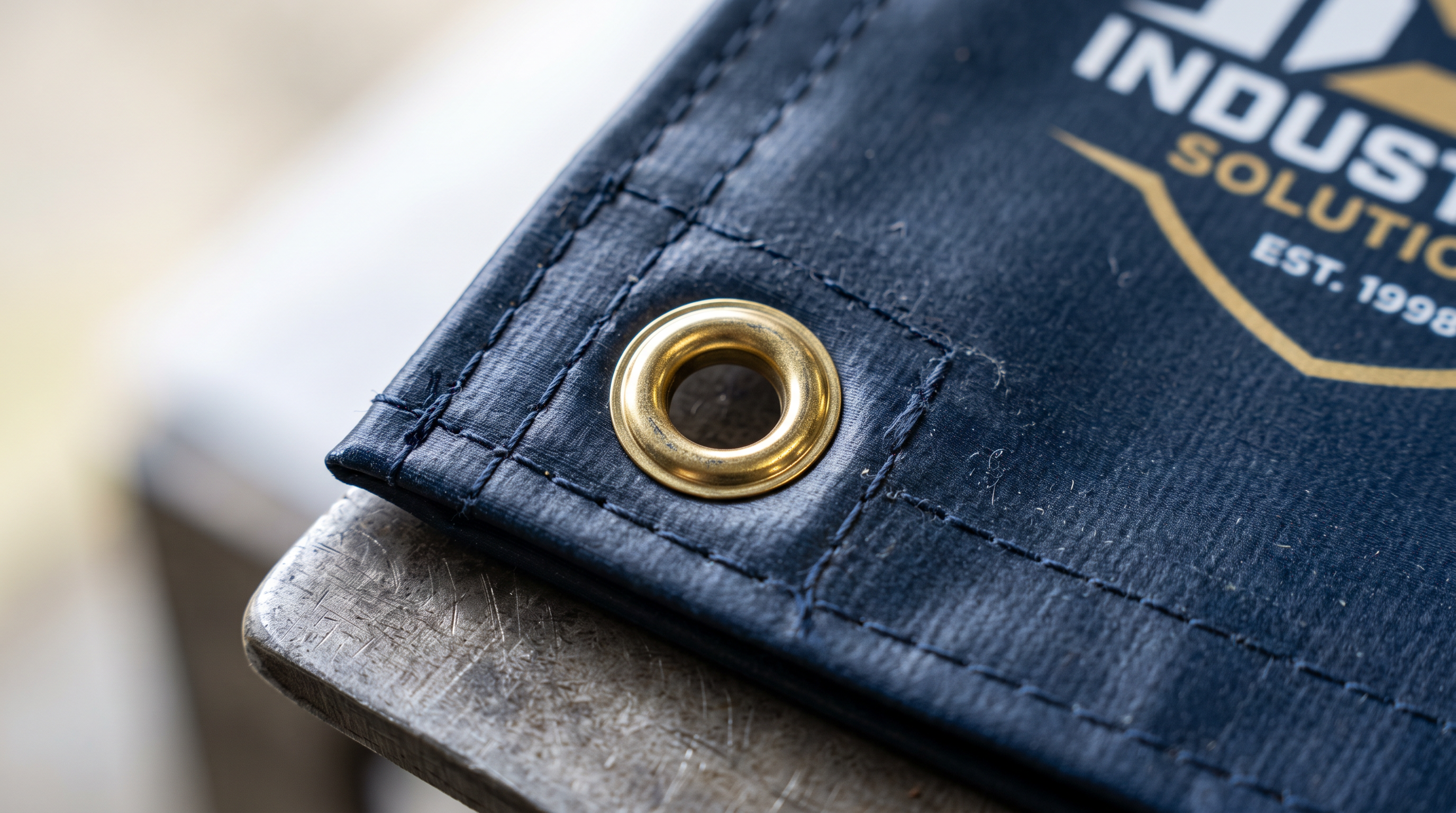
For banners with eyelets or hems, add an additional 50-100mm safe zone where eyelets will be placed, as these areas will be folded or have holes punched through them.
File Formats and Technical Specifications
Choosing the right file format ensures your artwork translates correctly to the printing process:
Recommended formats for large format printing:
- PDF (Preferred): Save as PDF/X-1a or PDF/X-4 with fonts embedded and images at full resolution. This is the most reliable format for UK print suppliers
- TIFF: Uncompressed or LZW compression, CMYK colour mode, with layers flattened
- EPS: With fonts converted to outlines and all linked images embedded
- Adobe Illustrator (.AI): Acceptable if fonts are outlined and images are embedded, but PDF is safer
Avoid: JPEG files (lossy compression reduces quality), RGB colour mode files, and low-resolution images stretched to size.
Font Management
Typography issues are among the most common artwork problems. Always outline fonts (convert text to paths) or embed them fully in your PDF. This prevents font substitution errors that can ruin your carefully chosen typography. If you must keep text editable, supply the font files alongside your artwork.
Pre-Flight Checklist Before Submitting
Before sending your files to PRiNT BiG UK, run through this essential checklist:
- ✓ Correct dimensions at actual size (or scaled proportionally with clear instructions)
- ✓ Appropriate resolution for viewing distance (typically 100-150 DPI for most applications)
- ✓ CMYK colour mode with appropriate colour profile
- ✓ Minimum 25mm bleed on all sides
- ✓ Text and logos at least 25mm from trim edge
- ✓ All fonts outlined or embedded
- ✓ All images embedded (not linked)
- ✓ File saved in PDF/X-1a or PDF/X-4 format
- ✓ Black areas using rich black for solid coverage
- ✓ No RGB images or spot colours (unless specifically discussed with your printer)
Most professional design software includes pre-flight tools that can automatically check for these common issues. Adobe Acrobat Pro, for instance, has built-in PDF/X validation.
Get Expert Support from PRiNT BiG UK
Proper artwork preparation is the foundation of successful large format printing. While these guidelines cover the essentials, every project is unique, and our experienced team at PRiNT BiG UK is here to help.
We offer free artwork checks for all UK customers and can provide templates for common products like banners, roller banners, and exhibition graphics. If you're unsure about any aspect of your file preparation, our London-based design team can review your artwork before printing or even assist with professional design services.
Ready to bring your vision to life? Contact PRiNT BiG UK today for expert guidance on your next large format printing project. Whether you're in London, Manchester, Birmingham, or anywhere across the UK, we deliver professional results with fast turnaround times and exceptional quality.
Tags:
Related Articles
Digital vs Traditional Large Format Printing: Which Is Right for Your UK Business?
Choosing between digital and traditional large format printing can be confusing. This guide breaks down the key differences, costs, quality considerations, and ideal use cases to help UK businesses make the right decision for their next print project.
Print Finishing Options for Large Format Banners UK: Eyelets, Pole Pockets & Hemming Explained
Choosing the right finishing for your large format banner can make or break your display. From eyelets and pole pockets to hemmed edges and bungee loops, this guide explains every option so UK businesses can order with confidence.